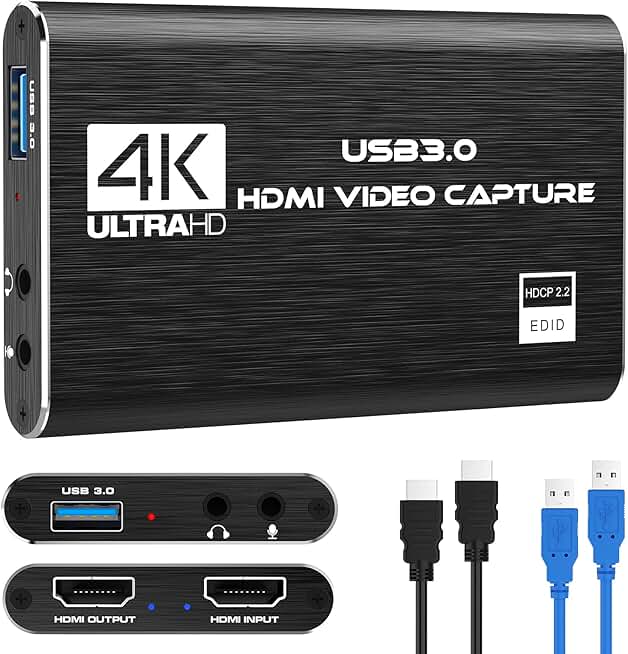
When shopping for a capture card, focus on these key specs and features:
Resolution and Frame Rate: Most modern capture cards handle 1080p60 without breaking a sweat. If you're streaming 4K content or want 1440p at high refresh rates, you'll pay more—but the visual quality jump is real. Check the passthrough specs too; some cards let you capture at one resolution while outputting to your monitor at another.
Connection Type: USB 3.0 is the standard for external cards and works with most computers. USB-C is becoming more common and offers faster speeds. Internal capture cards (PCIe) are overkill for most streamers but shine if you're running a high-end PC and want zero USB bandwidth concerns.
Latency: Ultra-low latency matters if you're streaming while playing competitively. Look for cards that advertise sub-50ms latency. HDMI loop-out (passthrough) is crucial—it lets you monitor your game on your TV or monitor without delay while the card records separately.
Compatibility: Check if the card works with your console. PS5, Xbox Series X/S, and Nintendo Switch all have different HDMI specs. Some cards struggle with certain consoles or require firmware updates. PC and Mac support varies too—read reviews from users on your OS.
HDR Support: If your console and monitor support HDR, look for capture cards that pass through HDR10 or better. Capturing in HDR is still rare and expensive, but passthrough support is increasingly standard.
Audio Handling: Verify the card captures game audio, chat audio, or both. Some budget cards drop audio entirely or require workarounds. If you're streaming, this is non-negotiable.
Red flags: Cards with no loop-out (you'll see lag on your monitor), no driver updates in over a year, or reviews mentioning compatibility issues with your specific console. Avoid anything that requires proprietary software if you use OBS or other open-source streaming tools.