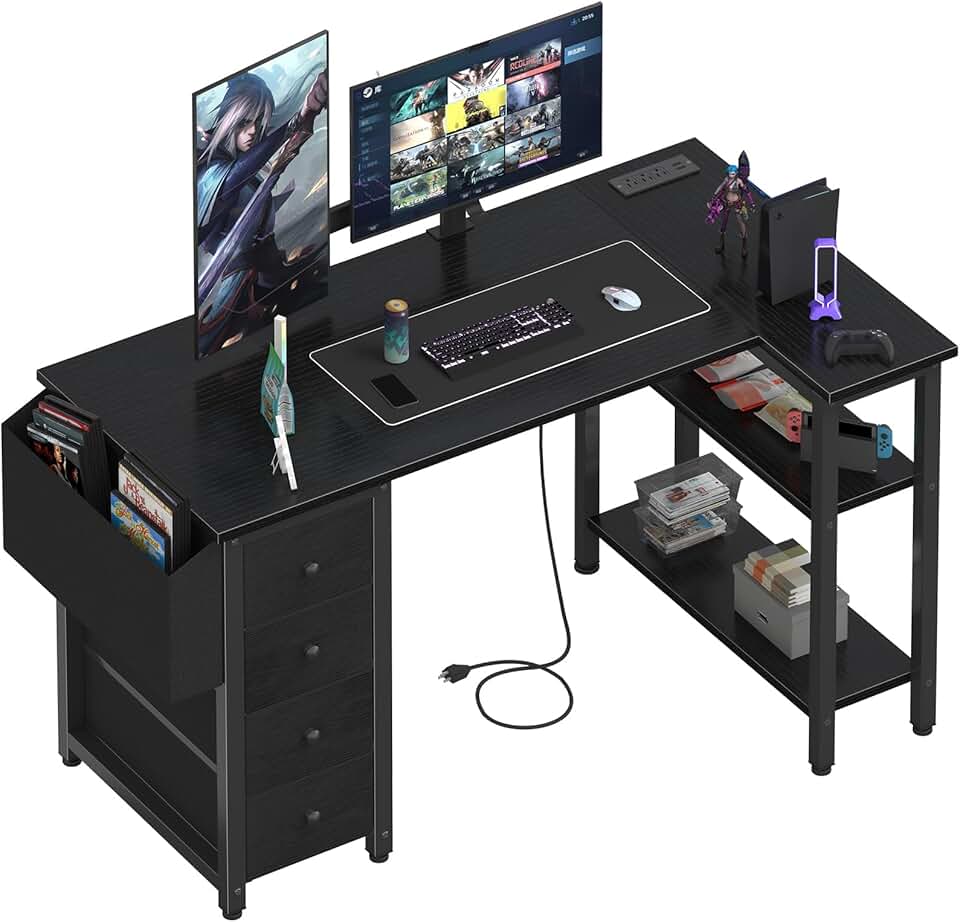
When shopping for a gaming desk built for competitive play, size and layout are your first filters. Straight desks work for single-monitor setups, but L-shaped and corner desks give you the real estate competitive players need—extra space for a second monitor, streaming equipment, or just room to move your mouse without hitting your keyboard.
Look for desks with a minimum depth of 24 inches and width of 47 inches. Anything smaller and you'll be cramped. If you're serious about competitive play, aim for 55+ inches wide; this gives you breathing room for mouse movement, which matters in FPS games where flick shots demand space.
Height adjustability is a competitive advantage. Fixed desks force you into one ergonomic position all day. Electric standing desks let you alternate between sitting and standing, reducing fatigue during long tournament prep sessions. Manual crank adjusters work too but are slower to use between matches.
Cable management separates competitive setups from chaotic ones. Look for built-in cable trays, grommets, or channels that hide USB cables and power cords. This keeps your desk clean and prevents cables from snagging your mouse during crucial moments.
LED lighting and RGB integration aren't just aesthetic—they reduce eye strain during late-night ranked grind sessions. Desks with integrated LED strips or power outlets for external lighting give you control over your lighting environment.
Storage matters more than you think. Pegboards, shelves, and drawers keep your controller, headset, and energy drinks within arm's reach without cluttering your main playing surface. Competitive players need quick access to gear without breaking focus.
Finally, check the weight capacity. Most gaming desks hold 200-300 pounds, but if you're mounting multiple monitors or heavy equipment, verify the desk can handle your full setup without wobbling. Wobble during competitive play kills your consistency.