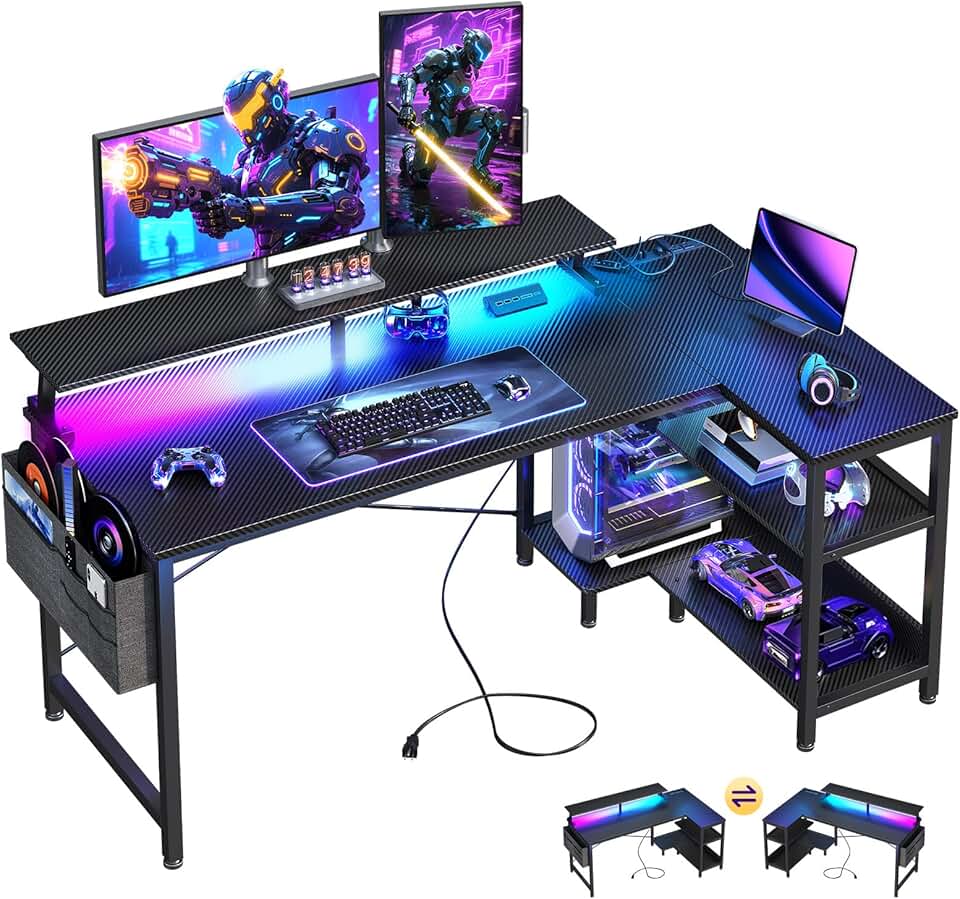
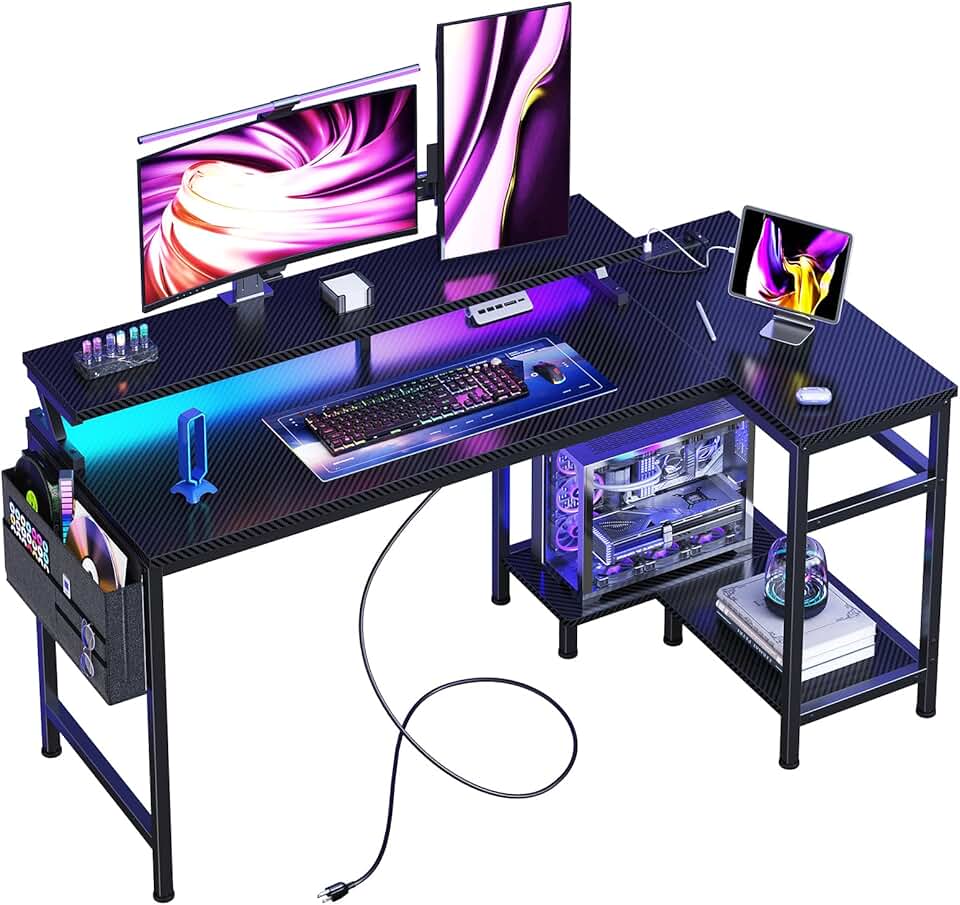
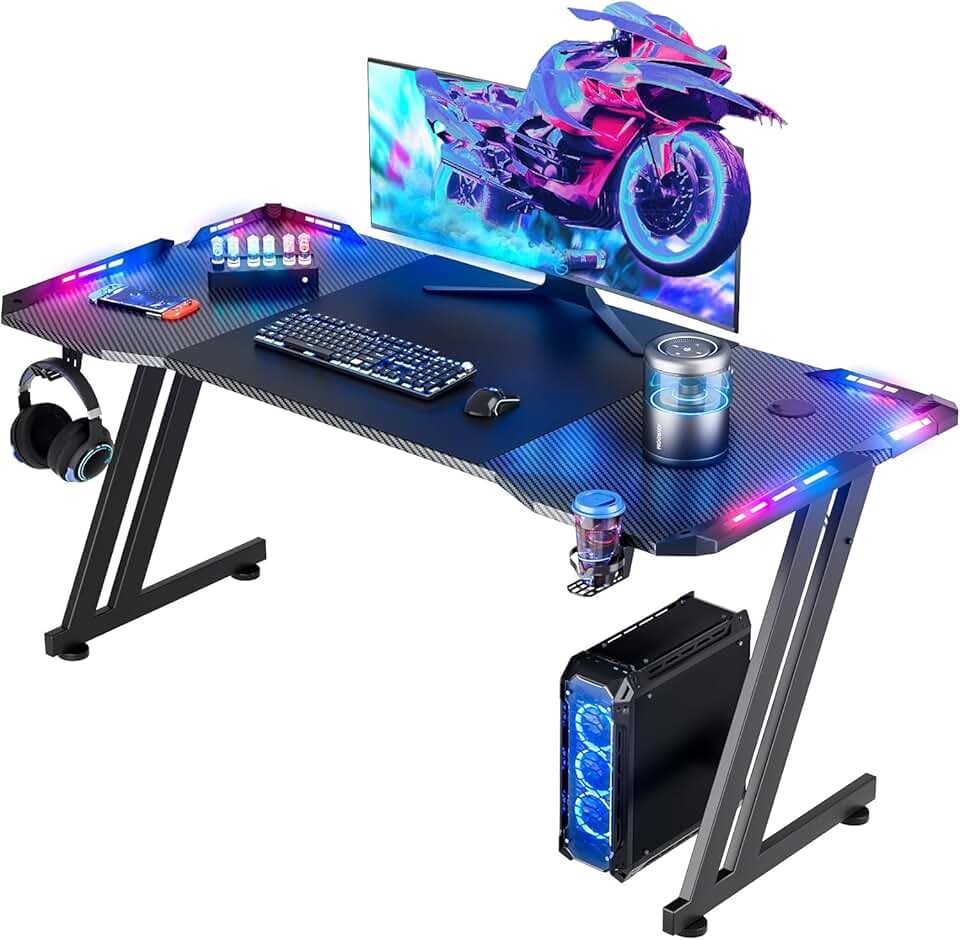
When choosing a gaming desk for left-handed use, reversibility is non-negotiable. Look for desks explicitly marketed as "reversible" or "L-shaped with reversible design"—this means you can flip shelves, monitor stands, and cable management to suit your left-hand dominant workflow. Standard desks often have fixed right-side cup holders and headphone hooks that waste valuable real estate on your left.
Size matters more than you think. A 47-inch straight desk gives you room for a mouse pad, keyboard, and monitor without feeling cramped. If you want to spread out, 55+ inch desks or L-shaped options provide dedicated space for streaming equipment, controllers, or dual monitors. Corner desks are especially valuable for left-handers because they let you position your mouse arm along the longer edge.
Check the surface material and height. Carbon fiber or textured surfaces reduce glare and improve mouse tracking. Standard desk height is 28-30 inches, which works for most gamers, but if you're tall or prefer standing, look for electric standing desks with adjustable heights (usually 22-48 inches). Cable management systems with clips, channels, and grommets keep your setup clean—critical when you're using your left side for input devices.
Storage shelves and monitor stands are practical but take up desk real estate. If you have limited space, a minimalist straight desk might serve you better than an L-shaped option with built-in shelving. Finally, weight capacity matters. Most gaming desks support 200-300 pounds, but if you're mounting dual monitors or a heavy streaming setup, verify the specs before buying. LED lights are nice but not essential—prioritize stability and ergonomics first.