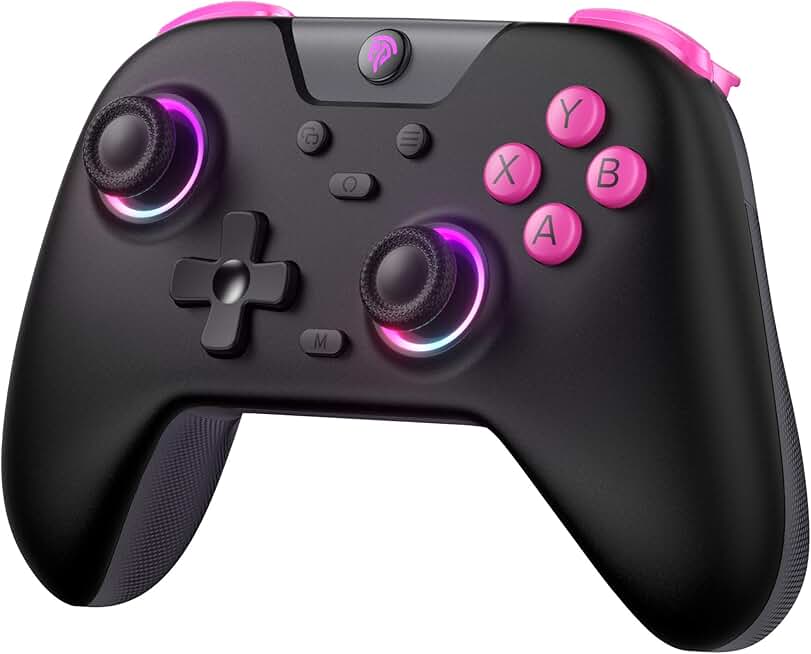
When shopping for RGB gaming controllers, focus on these key factors:
Joystick Type & Durability: Hall Effect joysticks use magnetic sensors instead of potentiometers, meaning they resist stick drift far longer. If you plan to keep your controller for years, Hall Effect is worth the extra cost. Standard analog sticks are cheaper but wear faster with heavy use.
Polling Rate & Response Time: A 1000Hz polling rate (like some EasySMX models) means your inputs register every 1ms—critical for competitive shooters. Most controllers use 125Hz or 250Hz, which is fine for casual play but noticeably slower in fast-paced games.
Platform Compatibility: Check if the controller works with your specific devices. Some are Switch-exclusive, while others support PC, Android, iOS, and Steam Deck. Wireless connectivity matters too—2.4GHz dongles are faster than Bluetooth but require a receiver.
Battery Life: Look for controllers with 1000mAh batteries or larger. Expect 15-25 hours of play between charges. Heavier use of RGB lighting drains batteries faster, so some controllers let you adjust brightness to extend playtime.
RGB Customization: Entry-level controllers offer fixed color cycles. Premium models include per-key programmability via software, letting you sync lighting with in-game events or create custom profiles. If RGB is just for looks, fixed modes are fine. If you want control, check for companion apps.
Trigger & Button Feel: Mechanical buttons feel snappier than membrane switches. Hall Effect triggers (not just joysticks) add precision for racing and shooting games. Tactile feedback matters in competitive titles.
Weight & Ergonomics: Lighter controllers reduce hand fatigue during long sessions. Some players prefer heavier, more substantial feels. Try to hold one before buying if possible—ergonomics are personal.