When shopping for gaming desks for casual gamers, focus on three core areas: size, stability, and surface quality.
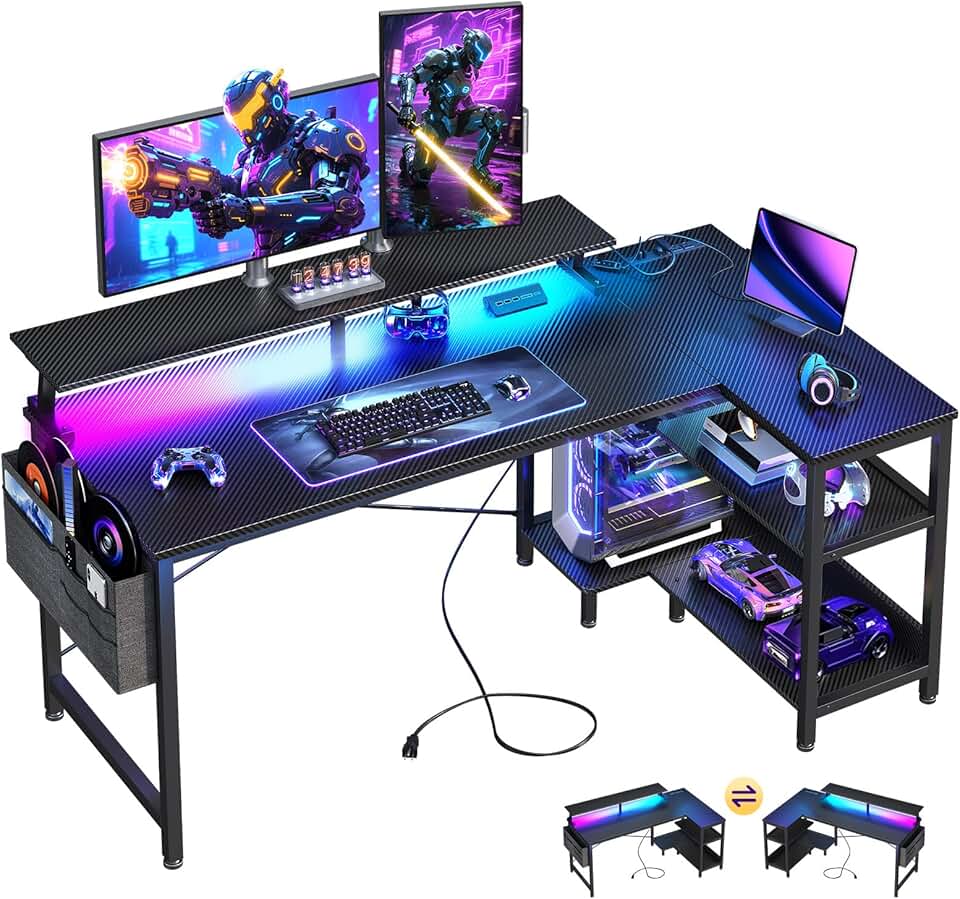
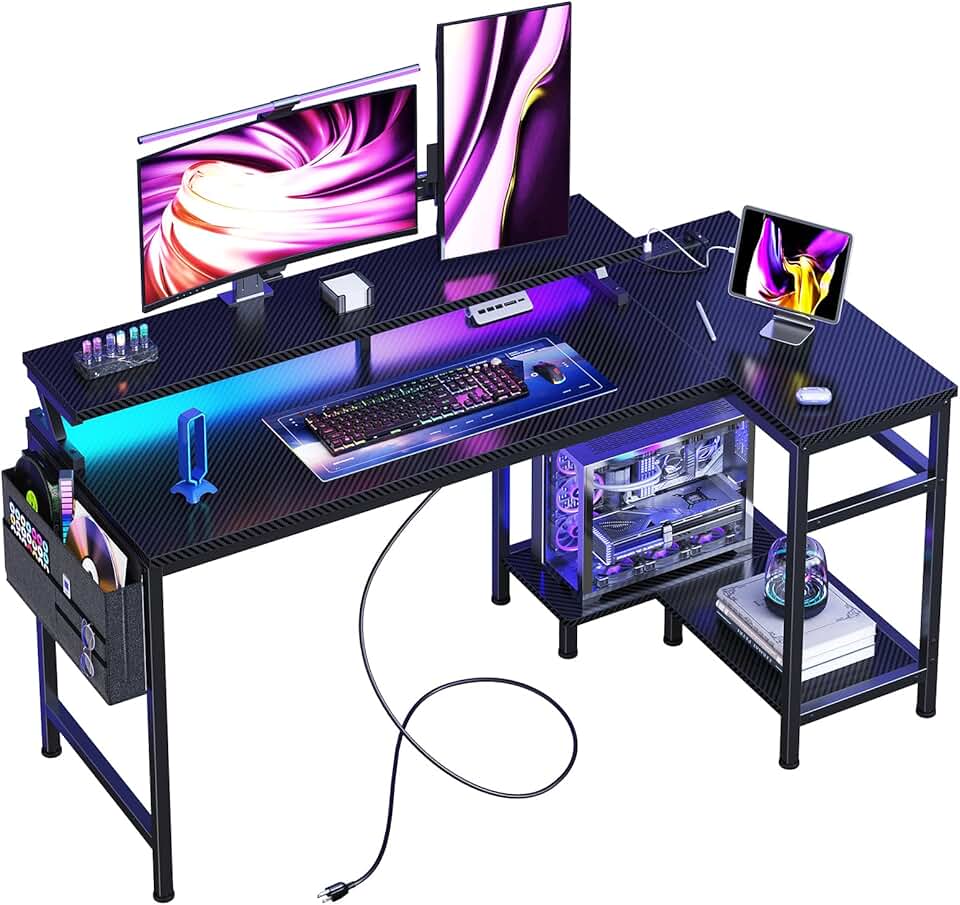
Size matters. Most casual setups work fine with 47–55 inches of width. That's enough for a monitor, keyboard, and mouse pad without taking over your room. L-shaped desks give you extra surface area if you need space for a second monitor, console, or streaming gear. Measure your space first—a desk that doesn't fit is worthless.
Stability is non-negotiable. Check the frame material: steel frames beat particle board every time. Look for desks with cross-bracing or thick metal supports. You don't want wobble when you're aiming in competitive games or typing. A sturdy desk should feel solid when you push on the corners.
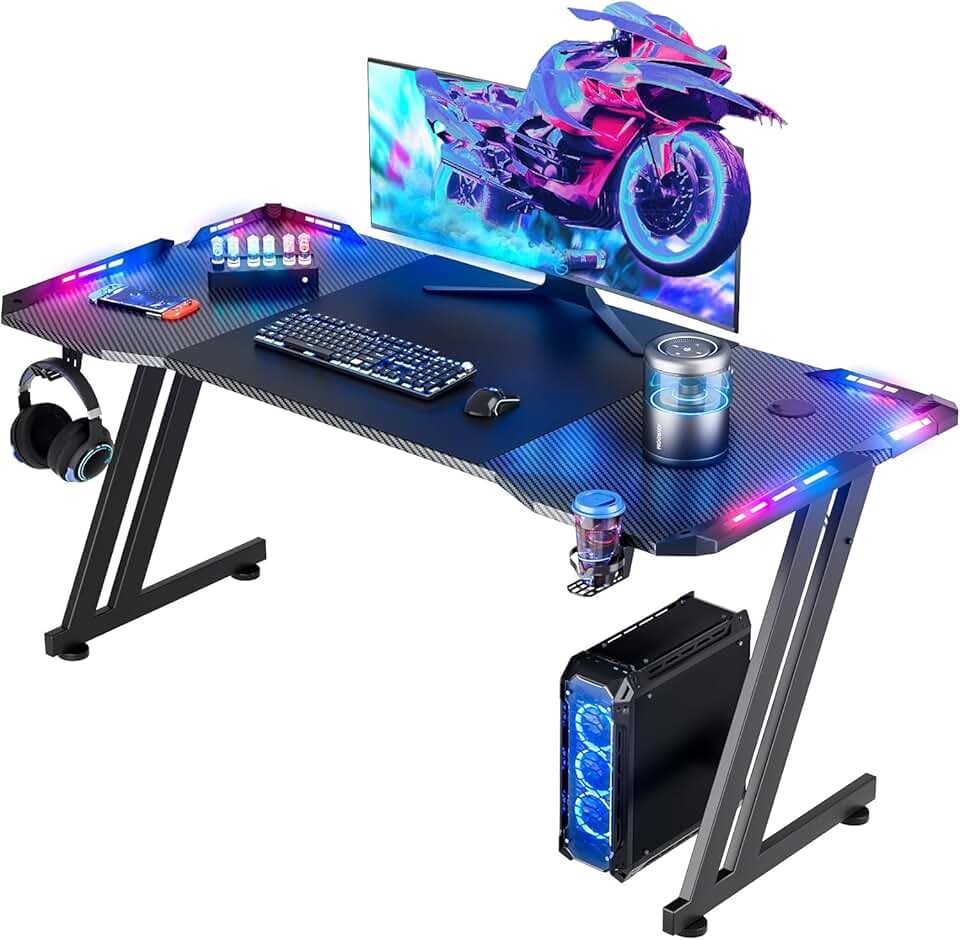
Surface texture and cable management. Carbon fiber textured surfaces resist fingerprints and provide decent grip for your mouse pad. Built-in cable management—clips, channels, or routing holes—keeps cords organized and prevents that tangled mess. Cup holders and headphone hooks are nice-to-haves, not must-haves, but they reduce clutter on your actual desk surface.
LED lights are cosmetic. They look cool and don't hurt, but they're not essential for gaming performance. Some casual gamers skip them to save money; others love the aesthetic. It's your call.
Red flags to avoid: Wobbly frames, cheap particle board that sags, desks with zero cable management, and products with consistently low reviews mentioning durability issues. Read recent reviews—they tell you what breaks and what lasts.
Budget reality: You can get a solid gaming desk for under $70. Spending $100+ gets you L-shaped layouts, more storage, or premium finishes. For casual gaming, anything $55–$120 is reasonable if the reviews back it up.