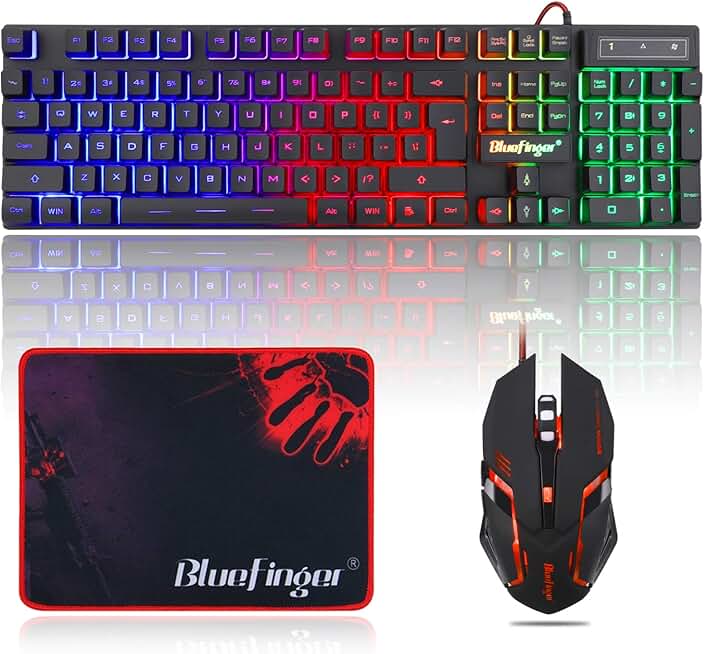
When shopping for the best gaming keyboards for casual gamers, focus on these key factors:
Switch Type Matters: Most casual gaming keyboards use membrane switches rather than mechanical ones. Membrane switches are quieter, cheaper, and perfectly fine for casual play. If you want something more tactile, look for keyboards that mention hot-swappable sockets—you can upgrade switches later.
Anti-Ghosting and Polling Rate: Look for 25-key anti-ghosting (prevents missed inputs when pressing multiple keys), and a 1K Hz polling rate (1000 Hz) if the specs list it. These specs matter more than you'd think for responsive gameplay, even casual sessions.
RGB Lighting: Most casual gaming keyboards include RGB backlighting. It's more about preference than performance, but programmable lighting zones let you customize the look. Some keyboards offer 15-zone RGB or per-key customization—nice if you want control, but not essential.
Wired vs. Wireless: Budget gaming keyboards are usually wired (USB). Wireless options exist but cost more and add battery management to your routine. For casual gaming, wired is fine and eliminates latency concerns entirely.
Combo Deals: Many of these keyboards bundle a mouse. If you need both, combos save money. If you already have a mouse you like, a standalone keyboard might be better value.
Size and Portability: Full-size keyboards are standard, but 60% and 65% compact layouts save desk space and are easier to travel with. They sacrifice the numpad and some function keys—fine for gaming, annoying if you do spreadsheets.
Build Quality: Check reviews for durability. Metal panels feel sturdier than plastic, and water resistance (IP32 rating) is a nice bonus if you're clumsy. Budget keyboards rarely last five years, but two to three years is reasonable.


![Redragon Updated S107 Gaming Keyboard and Mouse, RGB Gaming Keyboard and 10000 DPI Mouse Combo with 25-Key Anti-Ghosting, 1K Hz Programmable Mice with Software, Plug & Play to PC, Laptop [Upgrade]](https://m.media-amazon.com/images/I/71aECRRv3vL._AC_UY654_QL65_.jpg)