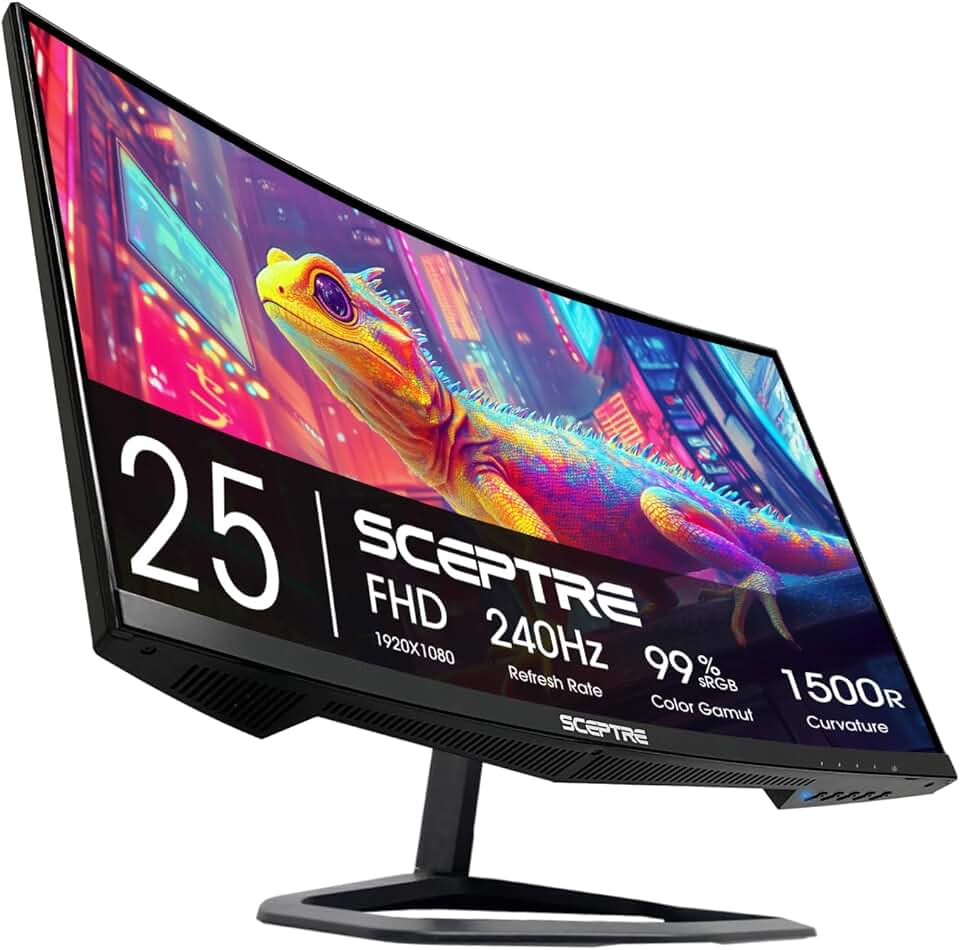
When shopping for gaming monitors for couch gaming, distance and viewing angle matter more than they do at a desk. You're typically sitting 8–12 feet away, so a 24-inch monitor works better than a cramped 21-inch, and curved panels (R1500 radius or tighter) reduce glare and improve immersion across that wider viewing distance.
Refresh rate is crucial for responsiveness. If you're playing competitive games on console or PC, aim for at least 120Hz—ideally 144Hz or higher. Paired with AMD FreeSync or NVIDIA G-Sync, you'll eliminate tearing and stuttering. Input lag (response time) should be 1ms or lower; anything slower will feel sluggish during fast-paced action.
Panel type affects color and viewing angles. VA panels (common in curved gaming monitors) deliver deeper blacks and better contrast, making them ideal for dark couch gaming environments. IPS panels offer wider angles but less contrast. TN panels are fast but have narrower viewing angles—less ideal for a couch where people might sit at different positions.
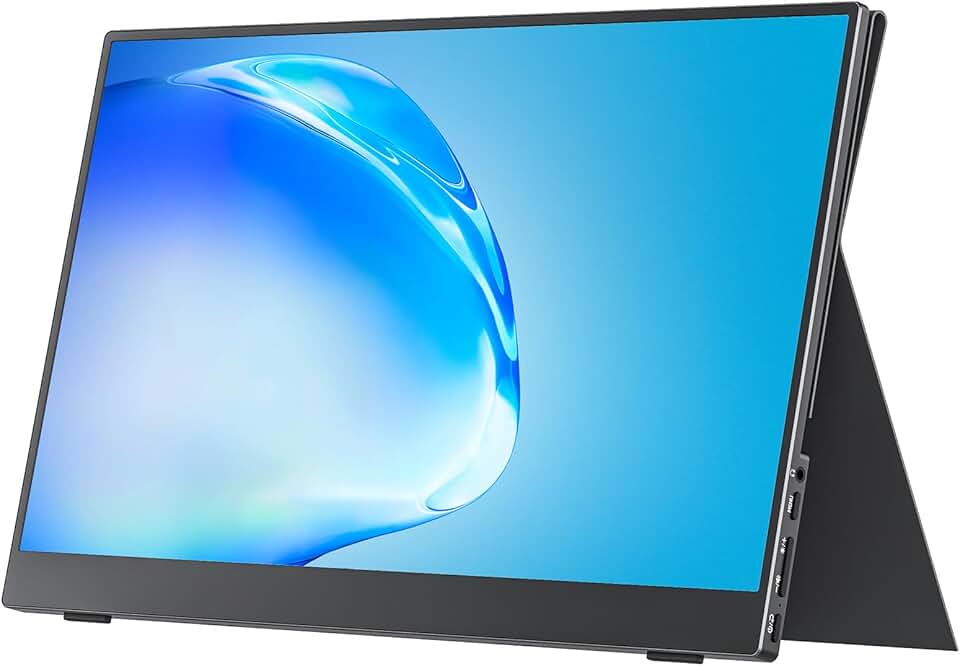
Connectivity is underrated in couch setups. You want multiple HDMI ports (so you can switch between console and PC without unplugging), DisplayPort for higher refresh rates, and ideally USB-C if you're using a portable monitor. Built-in speakers are a bonus if your couch area doesn't have a sound system nearby.
Resolution matters less than you'd think at couch distance. 1080p (1920×1080) is plenty sharp at 8+ feet away and keeps input lag low. 1440p looks nicer but requires more GPU power and can add latency. Avoid ultra-wide or 4K monitors unless you have a specific reason—they're overkill for couch gaming and harder to find with high refresh rates.
Finally, consider your room's lighting and cable routing. Curved monitors with built-in speakers and VESA mounts are easier to position behind a couch or on a wall. Portable monitors add flexibility if you game in multiple rooms.