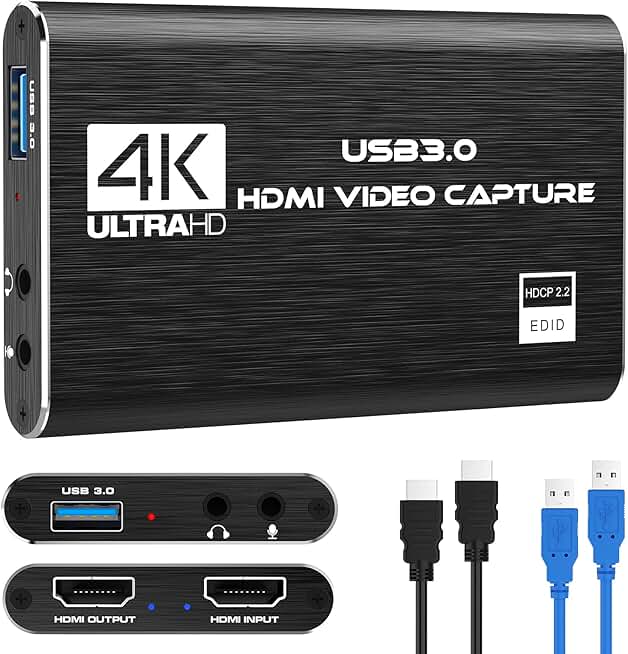
When shopping for a capture card for emulation, focus on these core specs and features:
Resolution and Frame Rate: Most emulation streams at 1080p60, but if you're capturing higher-end emulators or upscaled content, look for 4K input support with 1080p60 or 1440p120 passthrough. This lets you capture high-quality footage without slowing down your emulation.
USB Connection Type: USB 3.0 is the baseline for reliable 1080p60 capture without dropped frames. USB 2.0 works for lower resolutions but can struggle with 60fps. USB-C offers future-proofing and faster data transfer on newer systems.
Latency and Passthrough: Low-latency capture is critical for emulation—you need to see your gameplay in real time while streaming. Check for HDMI loop-out (passthrough), which lets you monitor video on a separate display without delay. This is especially important if you're playing competitively or speedrunning.
Driver Support: Stable drivers matter more than flashy features. Look for cards with active driver updates and compatibility with OBS, Streamlabs, and other streaming software. Windows and Mac support should be confirmed if you're using those platforms.
Audio Handling: Emulators often output audio alongside video. Ensure the capture card handles audio passthrough cleanly—no sync issues or missing channels. Some cards separate audio from video, which can complicate setup.
Plug-and-Play vs. Installation: USB capture cards that work without software installation are faster to set up, but they may lack advanced features like custom resolution scaling. Balance convenience against control.
Price vs. Performance: Budget cards ($10–$30) work fine for basic emulation capture, but pro-grade cards ($150+) offer better build quality, lower latency, and more reliable driver support. Mid-range options ($25–$50) often deliver the best value for emulation streamers.