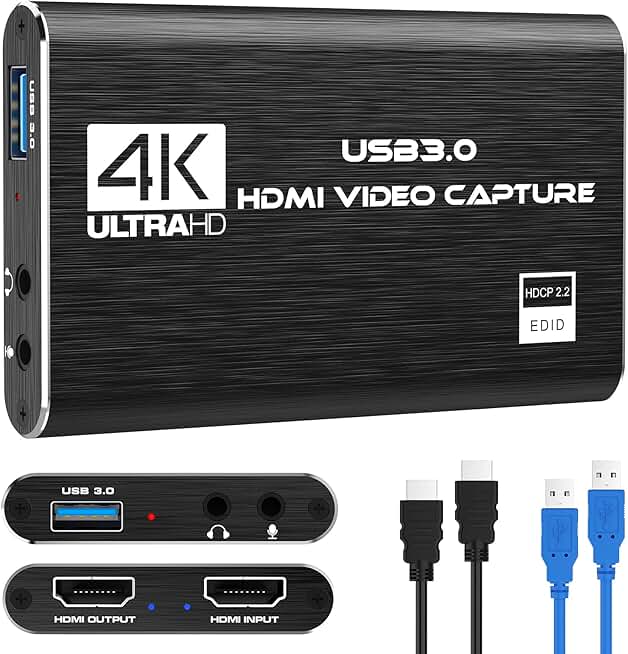
When shopping for a capture card, focus on three core specs: resolution, frame rate, and latency. Most YouTube creators benefit from 1080p 60FPS capture, which balances file size and visual quality. If you're streaming 4K content or want future-proofing, look for cards that accept 4K input and downscale to 1080p—this gives you flexibility without requiring massive bandwidth.
Passthrough capability matters more than you'd think. A capture card with HDMI loop-out lets you monitor your game on a second display while recording, keeping latency invisible to viewers. Low-latency models (under 1ms) prevent the awkward delay between your actions and what appears on stream.
Connection type determines compatibility. USB 3.0 and USB-C cards work with most modern PCs and Macs, but verify driver support for your operating system before buying. Some cards require additional software (OBS, Streamlabs), while plug-and-play models work immediately in Windows and macOS.
Consider your console ecosystem. If you're capturing Nintendo Switch, PS5, and Xbox Series X, you need a card that handles all three—not every budget model does. Premium cards like Elgato's 4K S support 4K60 passthrough and 1440p120 capture, ideal for competitive gaming streams.
Watch out for these red flags: cards without passthrough forcing you to use a single monitor, drivers that haven't been updated in years, and unclear compatibility lists. Read recent reviews mentioning your specific console and OS before committing. Budget options under $30 work well for beginners, but expect trade-offs in passthrough quality or software stability.