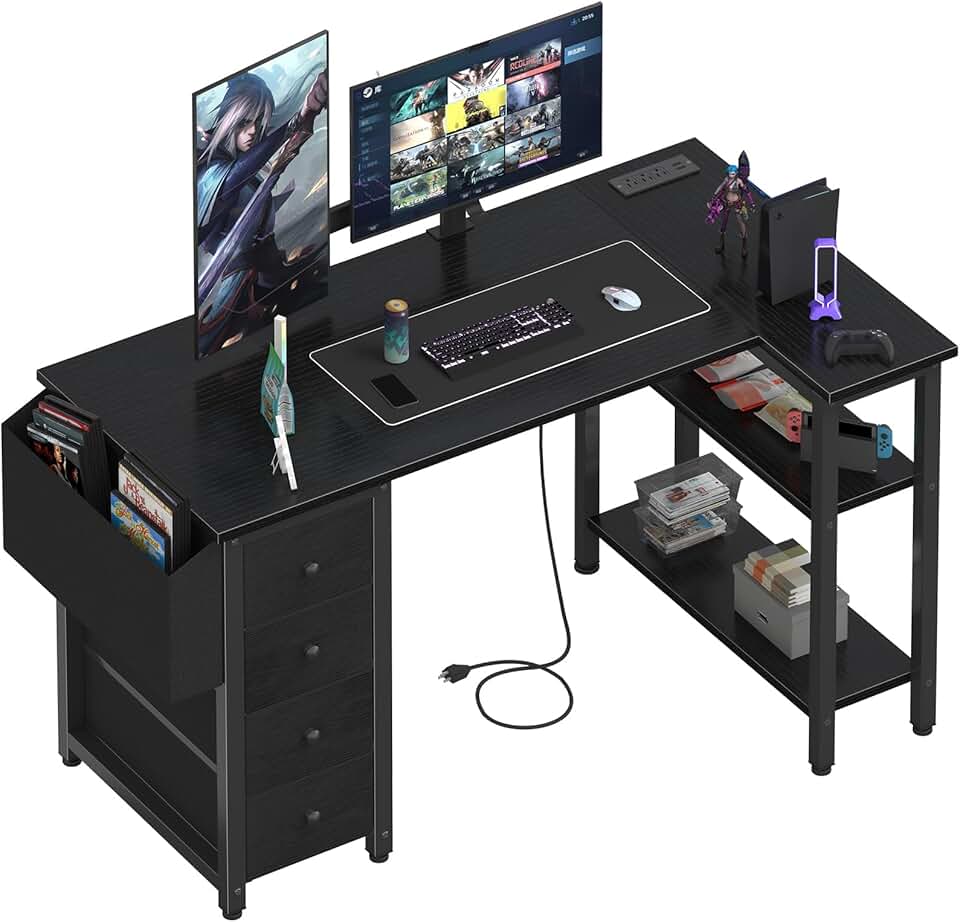
When shopping for a gaming desk for Valorant, focus on these core specs and features:
Surface Stability & Wobble
A rigid desk is non-negotiable for competitive gaming. Look for desks with steel frames and cross-bracing—flimsy particle board tops will flex under mouse movements and throw off your aim. Test reviews specifically for wobble complaints; even small vibrations matter when you're micro-adjusting crosshairs.
Desk Size & Layout
Valorant doesn't require a massive surface, but you need enough room for a large mouse pad (at least 18" x 10"), your monitor, and peripherals without crowding. A 47-55 inch straight desk or L-shaped corner desk works best. L-shaped models give you secondary space for a second monitor, streaming setup, or just breathing room.
Cable Management
Trailing cables are a distraction and a trip hazard. Prioritize desks with built-in cable trays, clips, or holes that let you route wires out of sight. Power outlets and USB ports built into the desk are a huge convenience—you won't need extension cords snaking across your floor.
Monitor Support
A dedicated monitor stand or riser keeps your screen at eye level, reducing neck strain during long sessions. Some desks include shelves; others have monitor arm compatibility. Either way, ensure your desk can support your monitor's weight without sagging.
Adjustability
Electric standing desks are a luxury but worth it if you play for hours. Sit-to-stand options reduce fatigue and keep blood flowing. Manual height adjustment is cheaper but less convenient. For Valorant's intense focus, a fixed desk at proper ergonomic height (29-30 inches) is fine if you take breaks.
Red Flags
Avoid desks with thin metal frames, particle board tops, or reviews mentioning wobble during gameplay. Skip models without cable management—you'll regret it. Be wary of desks requiring frequent assembly or missing hardware upon arrival.