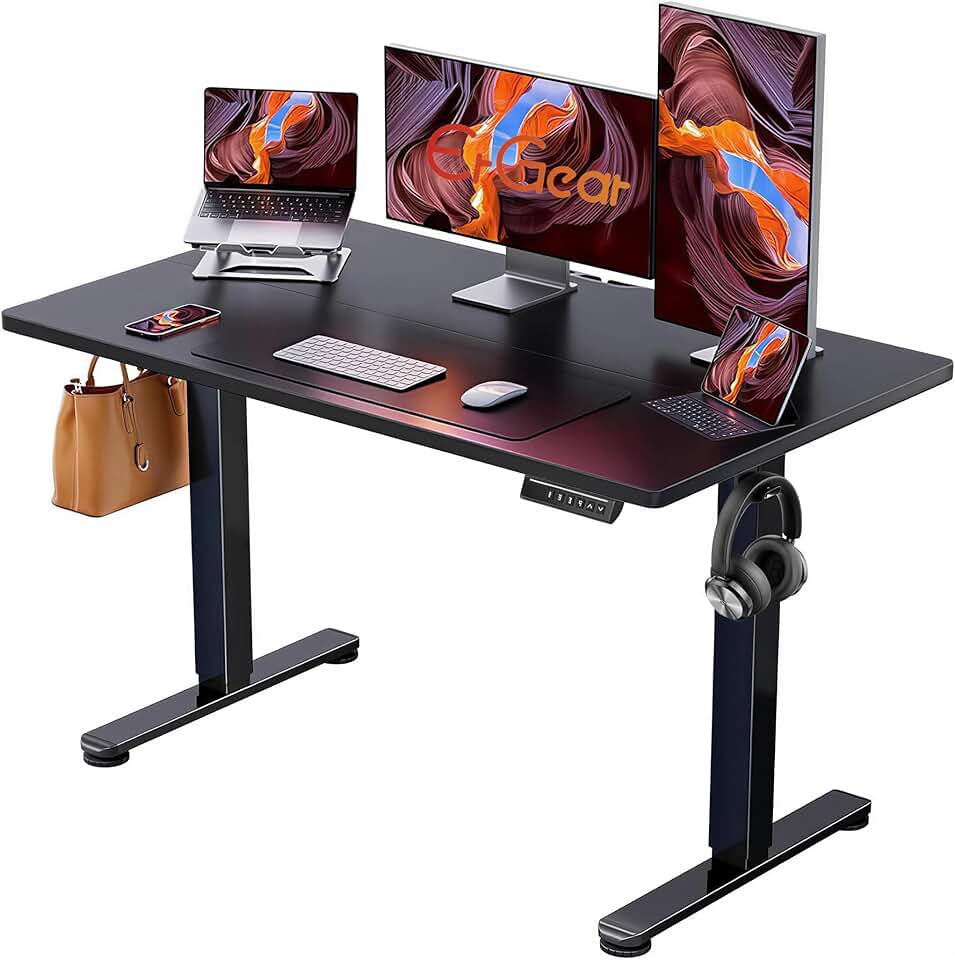
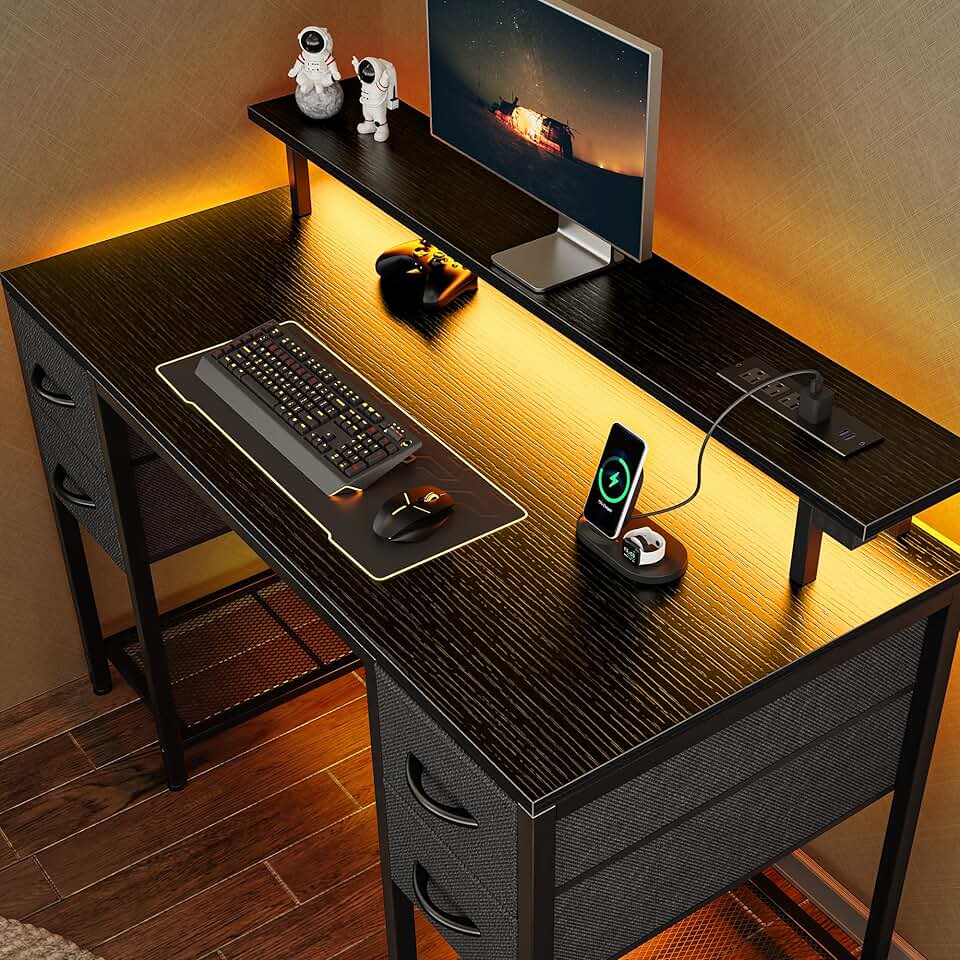
When shopping for a gaming desk that doubles as a work station, focus on these key factors:
Size and Layout: Measure your space first. A 48-inch straight desk works for small rooms, but if you have corner space, an L-shaped gaming desk gives you dedicated zones for work and gaming. Look for at least 24 inches of depth so your monitor sits comfortably away from your face (24-30 inches is ideal).
Height and Adjustability: Standard desk height is 28-30 inches. If you plan to stand part of the day, electric standing desks with memory presets let you switch between sitting and standing without fiddling with manual cranks. Check the height range—most electric models go from 22-48 inches, which accommodates both sitting and standing users.
Material Quality: Particle board with veneer is budget-friendly but can sag under weight over time. Medium-density fiberboard (MDF) is more stable. Metal frames add rigidity, especially on larger desks. If you're mounting multiple monitors or a heavy gaming setup, prioritize a sturdy metal frame.
Cable Management: Built-in cable trays, grommets, or routing channels keep your setup clean and prevent cables from tangling. Power outlets integrated into the desk save you from running extension cords across your floor.
Storage and Extras: Drawers, shelves, and monitor stands help you stay organized. LED lighting isn't essential but adds visual appeal during late-night work sessions. Consider whether you need a CPU stand, file drawer, or side storage bag.
Weight Capacity: Most gaming desks support 100-150 lbs, which handles dual monitors, a mechanical keyboard, and a mouse. If you're mounting a heavy arm or adding lots of equipment, verify the weight rating.
Budget Reality: You don't need to spend $300+ for a solid gaming desk. Many sub-$100 options deliver excellent build quality and user ratings above 4.4 stars. Spend more if you want electric height adjustment or premium materials.